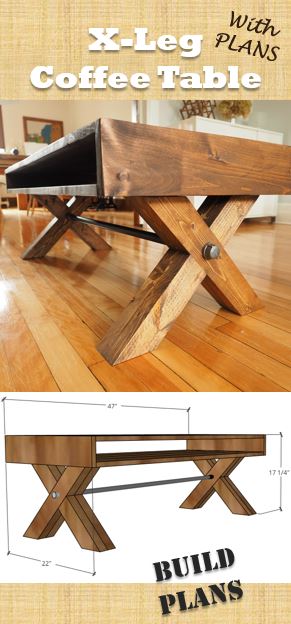
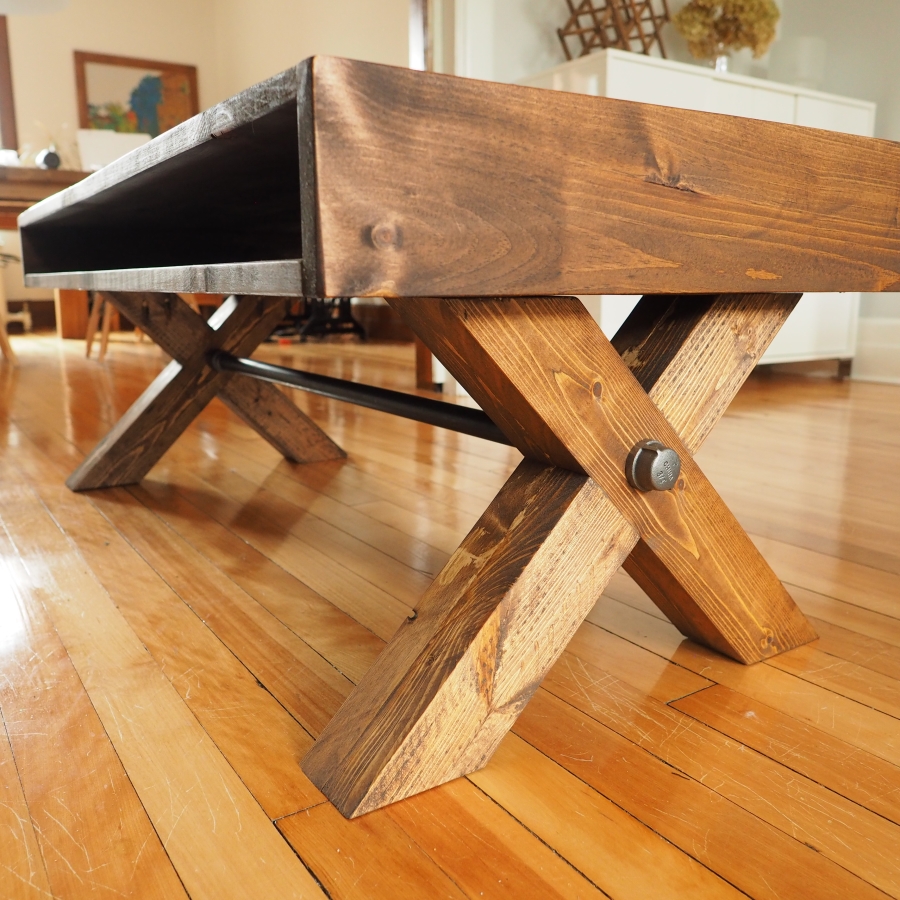
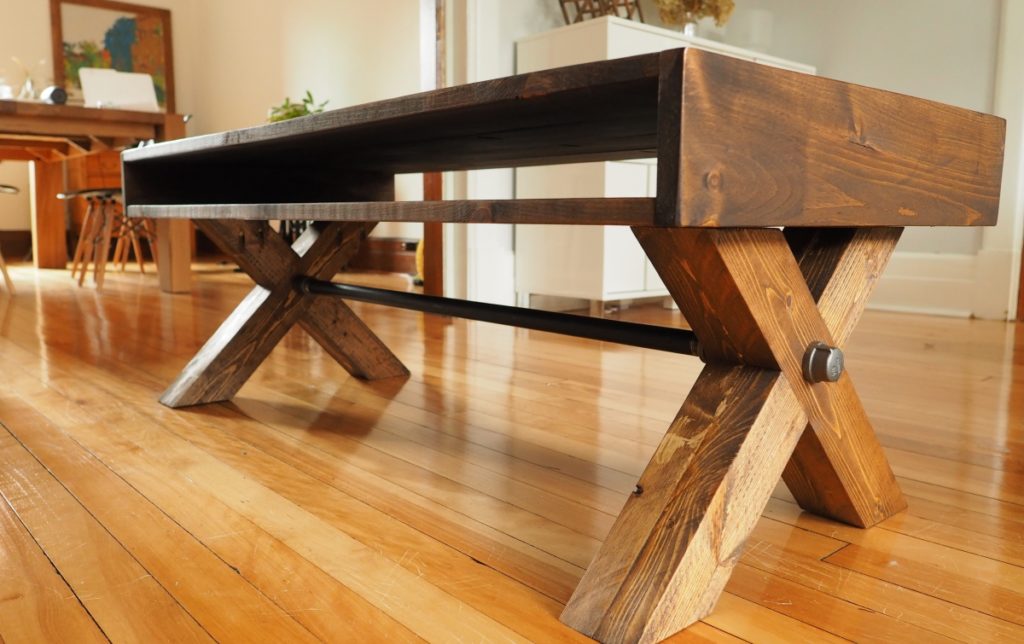
So I signed up for season 5 of the Instagram Builder’s challenge @igbuilderschallenge. The challenge is to build a piece of furniture based off the plans they provide, but to modify the design and make it your own. This time around we were challenged to build an X brace coffee table with a shelf.
Click here to SUBSCRIBE to my YouTube channel for more DIY videos!
To make it my own, I decide to make the coffee table more modern with an industrial flair. I kept the X leg as per the original design, but modified for a full length shelf where you can hide away remotes, magazines, Kleenex, coasters, or whatever, and added black iron pipe as a cross support for the legs for a modern industrial look.
The overall table dimensions are 47 x 22 x 17. I made it using dimensional pine bought at the big box store. You can get the plans here.
—– GET THE PLANS HERE —–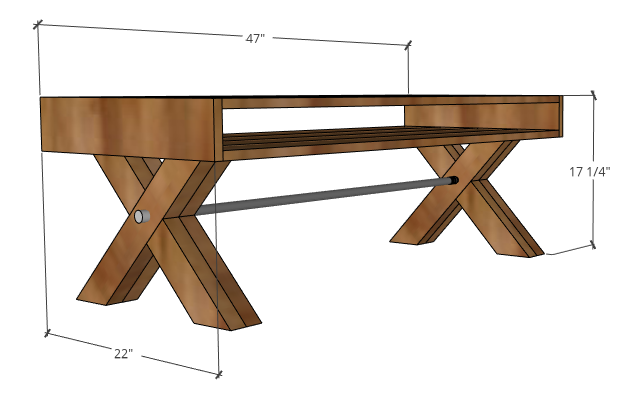
Materials
- (2) 2 x 4 x 8
- (1) 1 x 6 x 6
- (4) 1 x 6 x 8
- Black iron pipe
- Pipe nipples
- (2) Couplings
- (2) End caps
- (50) 1-¼ pocket screws
- Wood conditioner
- Wood Stain
- Polyurethane
- Danish Oil
- Gorilla wood glue
- Wood filler
Tools
- Table saw
- Miter saw
- Pocket hole jig
- Orbital sander
- Drill
- Clamps
- Gator zip
- Putty knife
- 1 inch spade
- Stain applicator pads
- High density foam brush
Build the table top
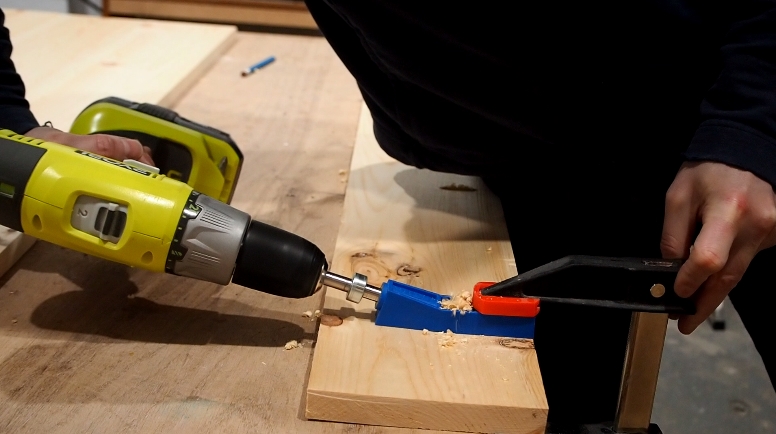
You’ll need to first make two panels, each made up of four 1×6 boards. Start by pre-drilling pocket holes along the edge of 3 of the 4 boards that will be used to make up the tabletop and shelf. Place the first pocket hole at about 2-3 inches from one end of the boards, then space out the pocket holes every 6-8 inches.
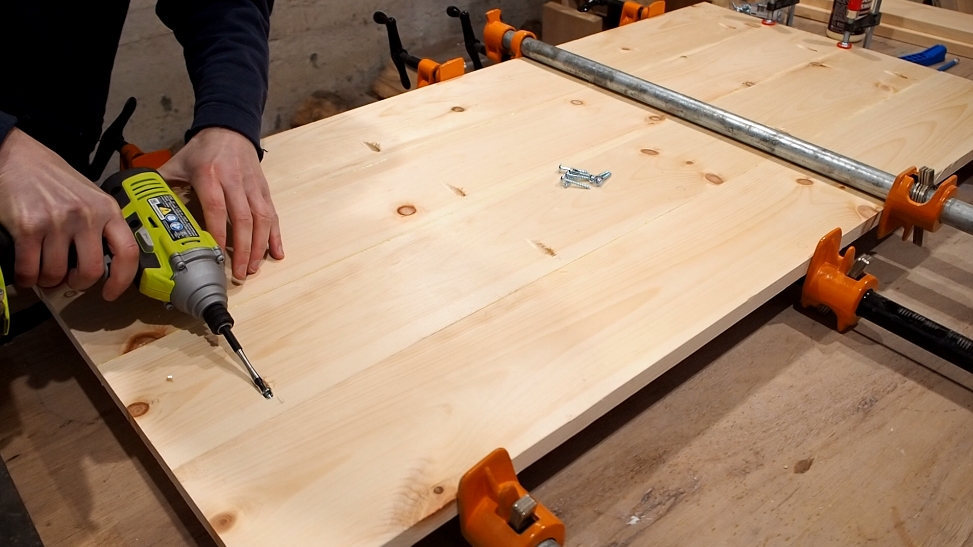
Once all the hole are pre-drilled, lay the 4 boards flat, edge to edge, to form a panel. Apply some glue and use clamps to butt them tightly together, making sure to check the ends are square.
With the clamps tightened (don’t overdo it or the boards will bow) secure the boards together using 1-¼ pocket screws.
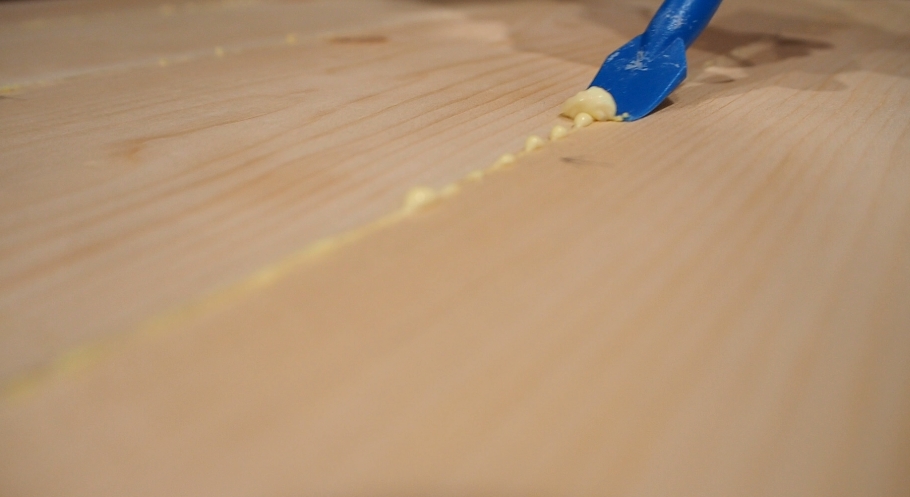
Make sure to clean off the squeeze out while the glue is still moist using a scraper or a wet paper towel.
Repeat the same process for the second panel.
To make things easier, I sanded down both assembled panels at this point, as it will be difficult once the table is assembled. I sanded to 120-grit, then 220-grit using my orbital sander. I also sanded the 2 pieces that will make up the sides.
Before assembling the box that will form the tabletop, you’ll want to pre-drill pocket holes on each end of the top and bottom panels.
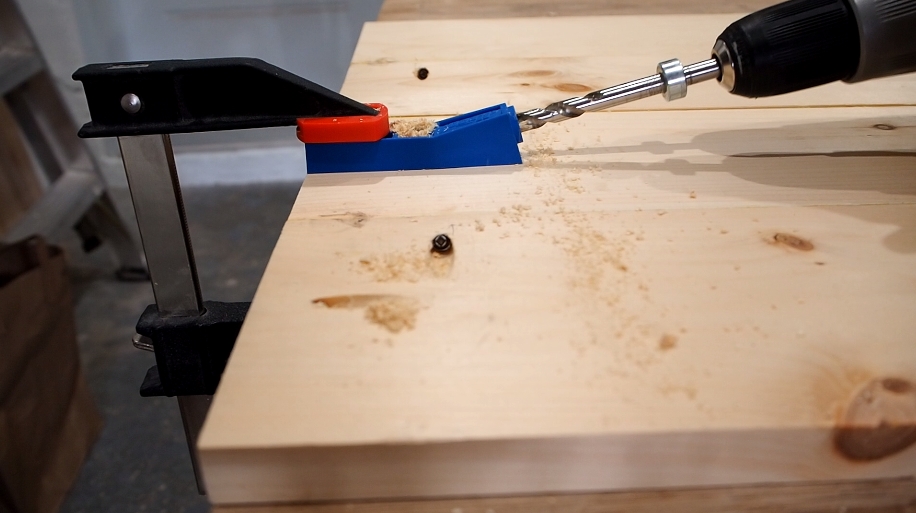
Lay the panel you want to use as the top of the table upside down, with the tabletop flat against your workbench (you should see the pocket holes). Use clamps to secure the 2 side pieces to each end, first applying glue. Attach using 1-¼ pocket screws in the pre-drilled holes.
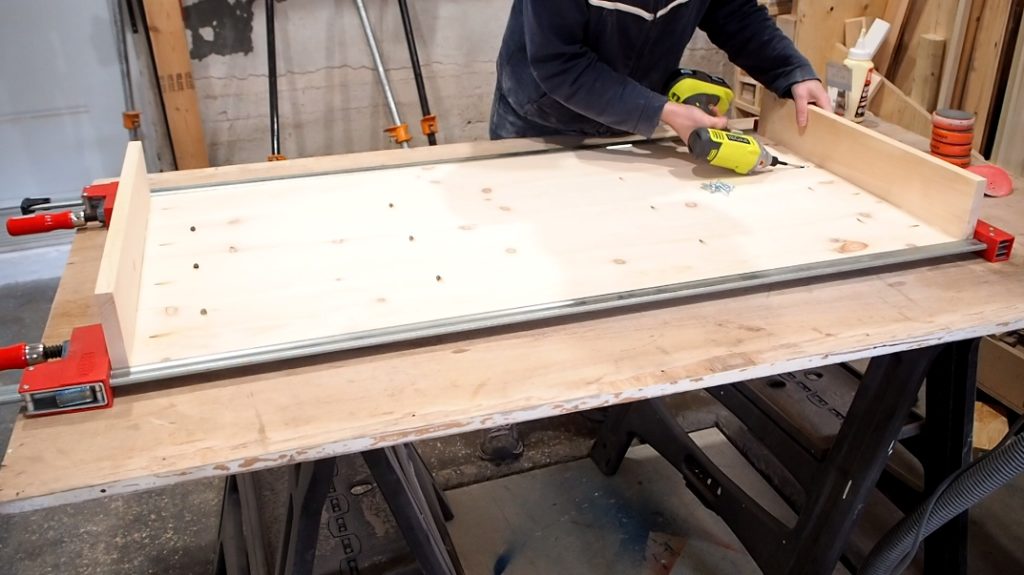
Next add the bottom shelf (again upside down), clamp and secure with pocket screws.
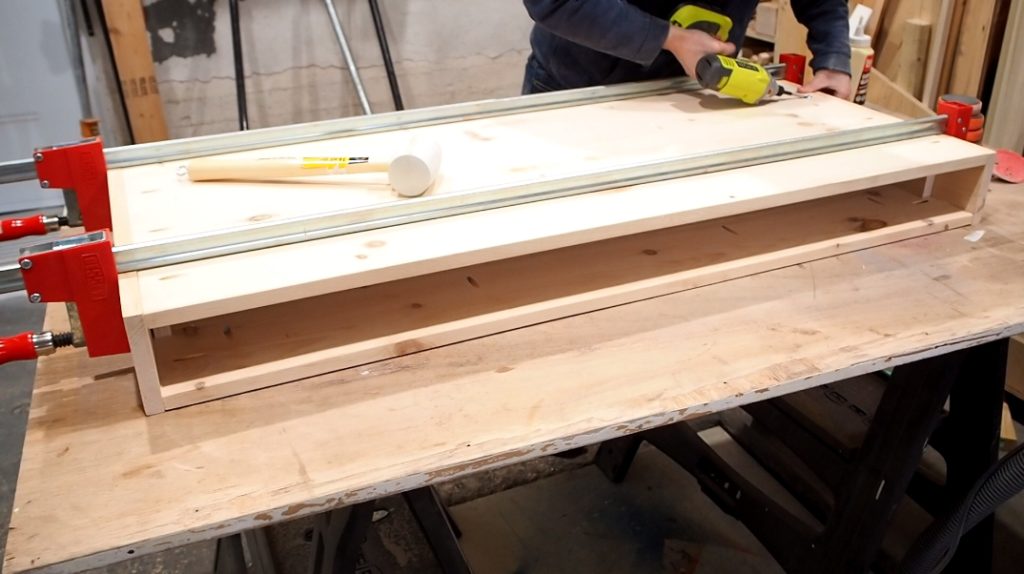
Once the box is built, go ahead and flip it right side up. If you see any gaps, fill them in with some wood filler (or wood glue mixed with sawdust).
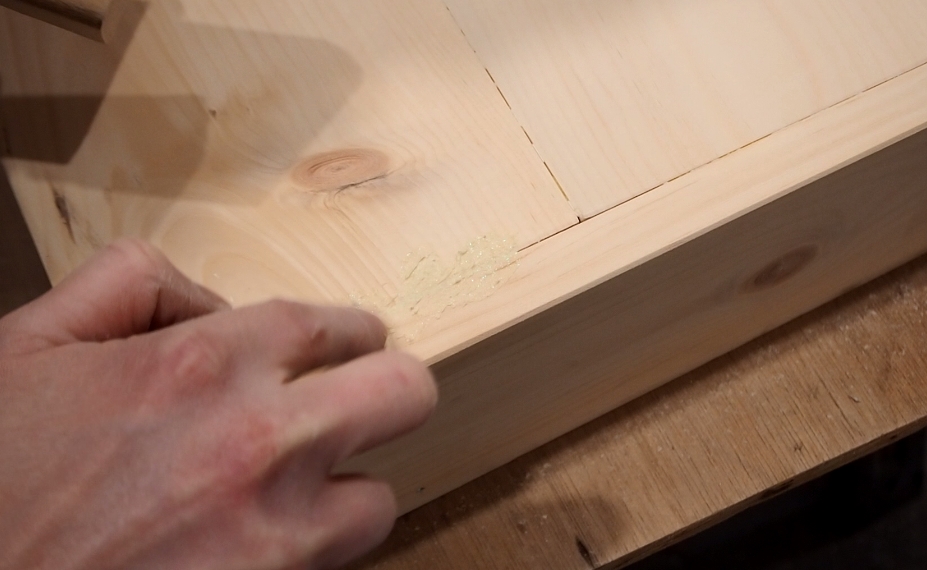
The last step is to sand down the top and the edges up to 220-grit.
Build the X legs
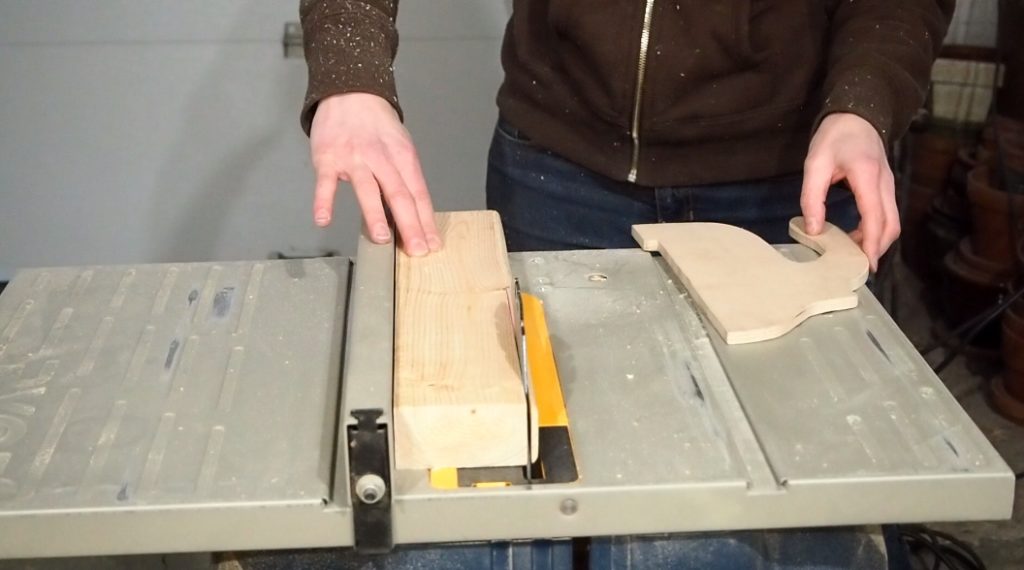
For the legs I used 2x4s that I ripped down to 3 inches using my table saw. I started by shaving ¼ inch off one side, then ¼ inch off the opposite side. This removes the rounded edges and gives the boards a modern clean look.
I set my miter saw to 45° and cut all my pieces to size using a stop block for accuracy and repeatability. You’ll have 4 longer pieces and 4 shorter pieces cut in half.
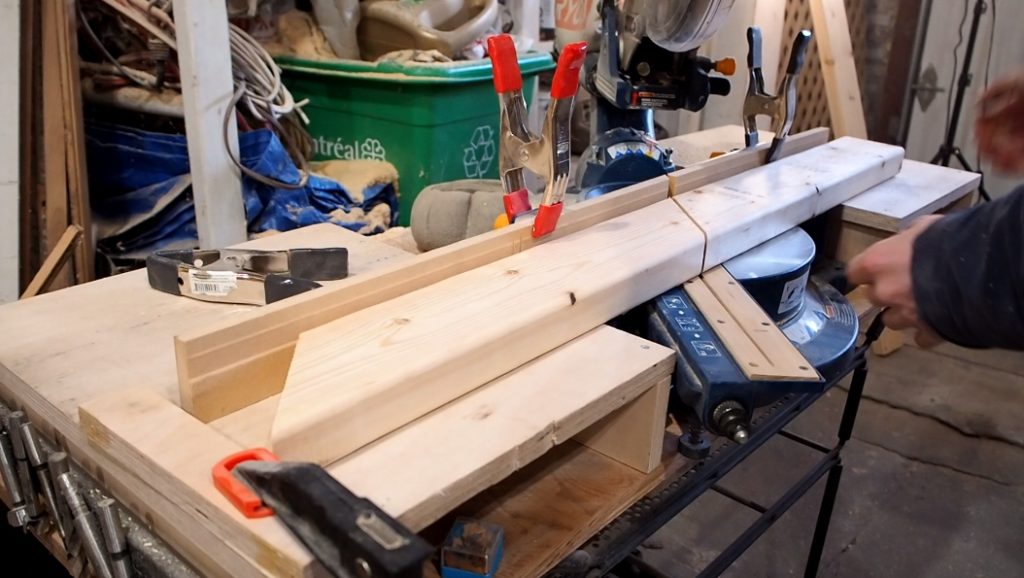
The glue-up is the tricky part. I decided to glue one side of the legs at a time. I used smaller clamps vertically to align the boards vertically, and larger clamps to clamp the leg down to my workbench. I used Gorilla wood glue and let it set for 30 minutes before flipping the legs over and repeating the process on the other side.
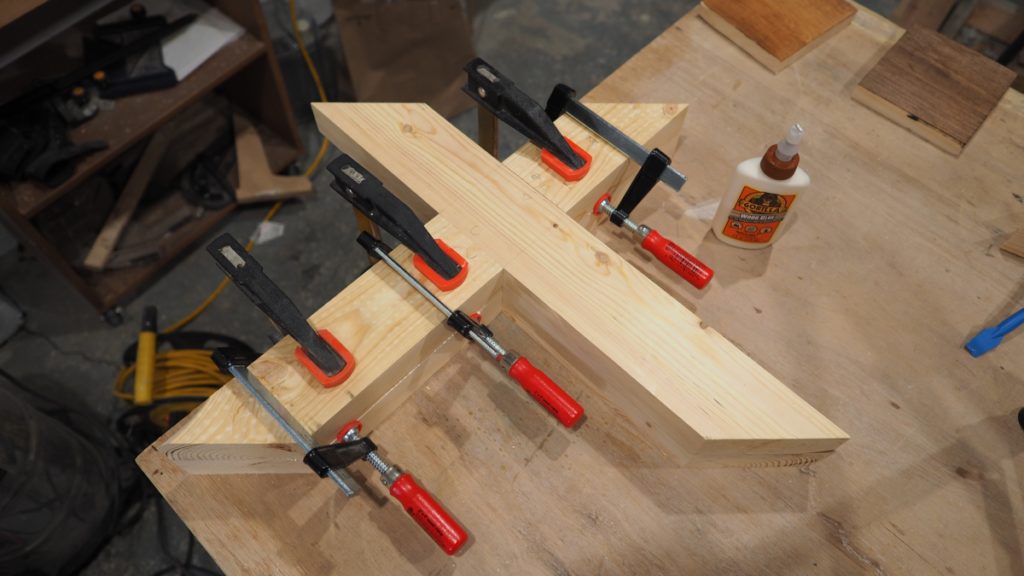
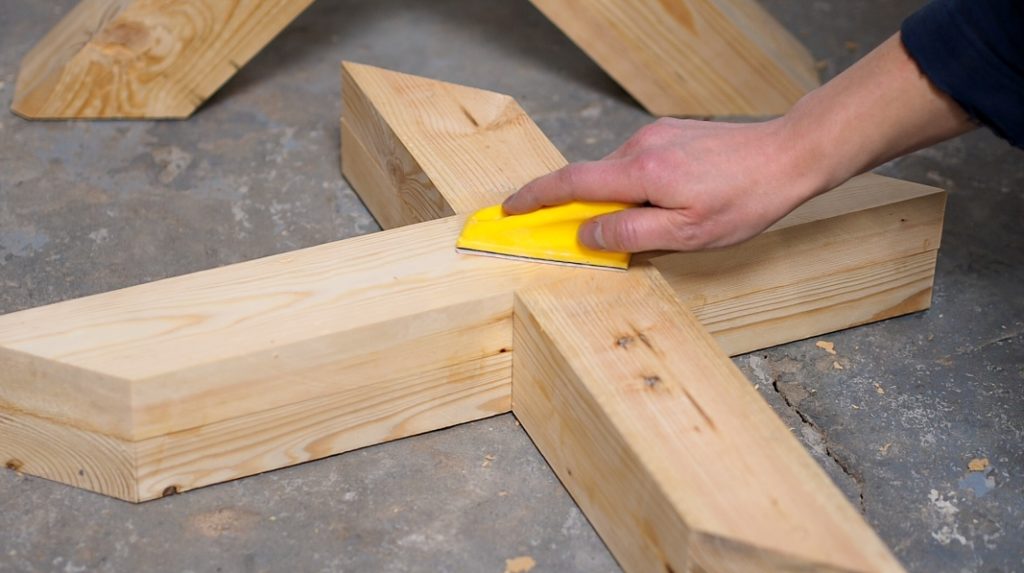
Once the glue was dry, I filled any gaps using wood filler and a putty knife. I let it dry for a couple hours, then sanded everything down using my Gator Zip.
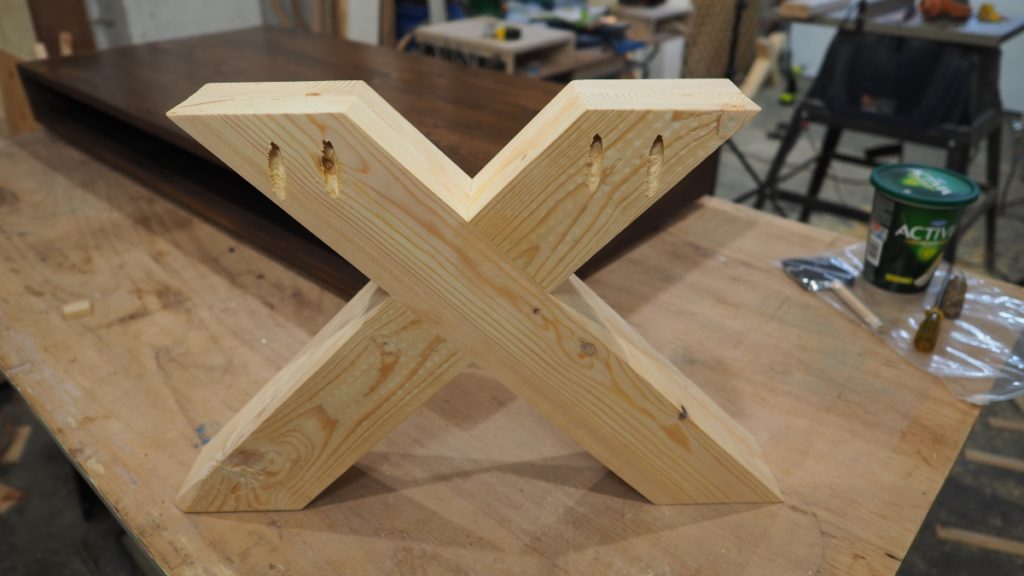
Before moving onto the finish, I pre-drilled some pocket holes at the top of the Xs on the inside face. These will be used to later attach the legs to the tabletop.
Stain
Instead of waiting until the end, I chose to stain the tabletop and the legs at this point, thinking it would save me some headaches down the line.
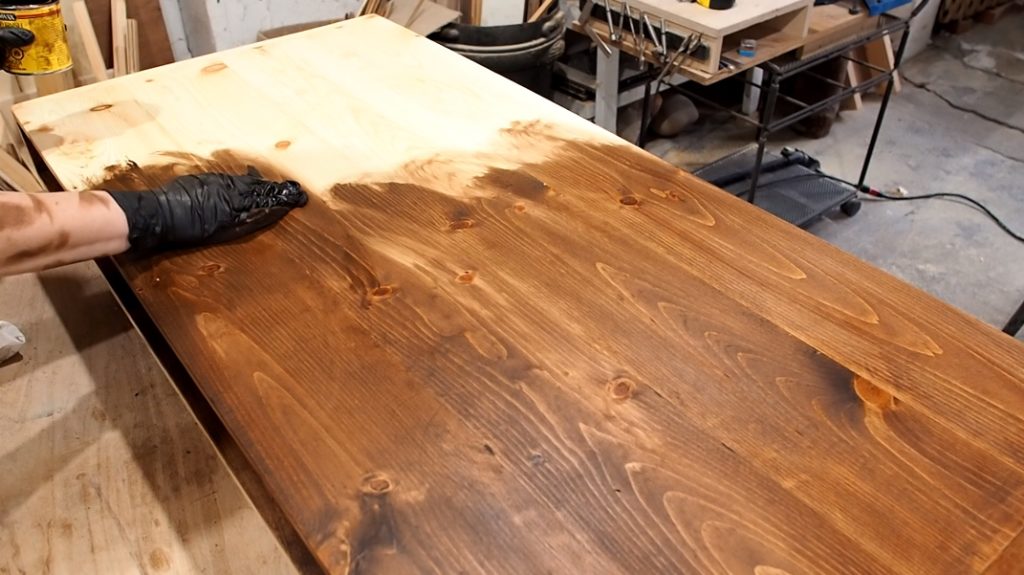
After vacuuming up all the sawdust and wiping down all the parts, I applied wood conditioner and let it set for about 30 minutes. I find the conditioner helps the stain better penetrate pine wood and prevents blotchiness. I then applied Espresso wood stain from Minwax to the entire tabletop and the legs.
Mount Black Iron Pipe
I had my black iron pipe cut to length and threaded at a local hardware store, but you may be able to buy these off the shelf where you live.
You’ll need to find the center of the X on each leg and drill a hole through using a 1 inch spade bit. I used tape to prevent tearout.
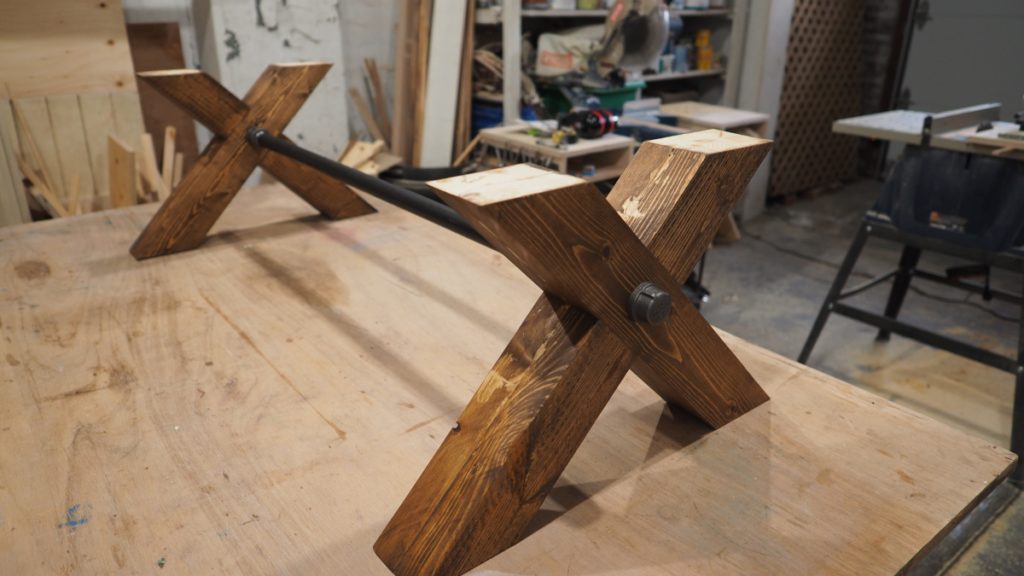
Screw an end cap onto each of the pipe nipples. Screw a coupling onto each end of the longer pipe. Slip the pipe nipple through the X leg and connect it with the other end of the coupling. Repeat for the second leg. Tighten.
Assemble
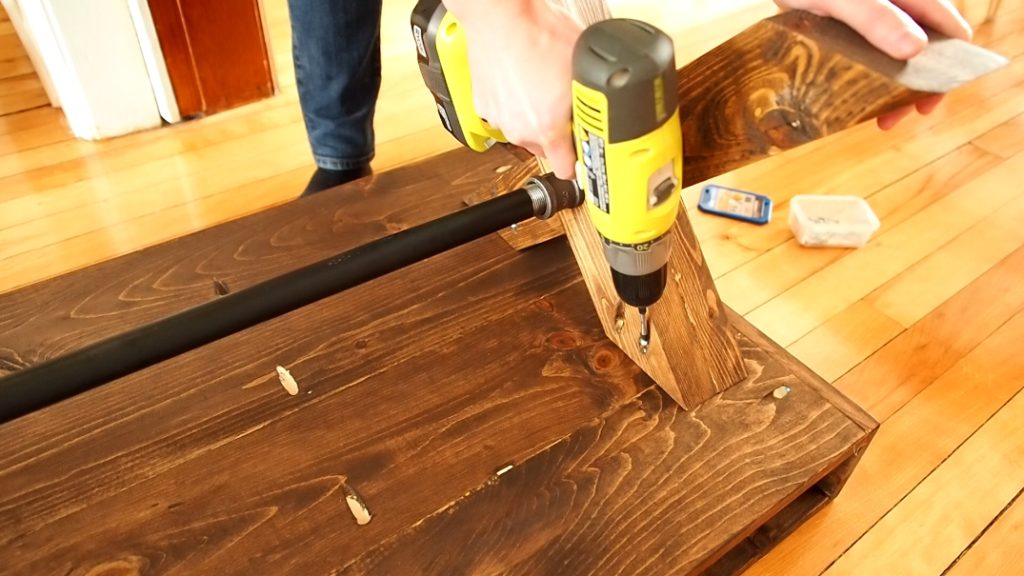
With the base and the top assembled, all that’s left is to connect the two together. Center the base underneath the tabletop and fasten with 1-¼ pocket screws.
Apply Finish
To finish off this project, you’ll need to seal the wood with a finish of your choice. I was feeling a little lazy so I simply rubbed on a couple coats of natural Danish oil to the entire table, except the top – I used 3 coats of Varathane polyurethane varnish for the top since it will likely be exposed to moisture and liquids.
Get the plans for this build here